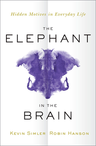
We, human beings, are a species that’s not only capable of acting on hidden motives—we’re designed to do it. Our brains are built to act in our self-interest while at the same time trying hard not to appear selfish in front of other people. And in order to throw them off the trail, our brains often keep “us,” our conscious minds, in the dark. The less we know of our own ugly motives, the easier it is to hide them from others. Self-deception is therefore strategic, a ploy our brains use to look good while behaving badly.
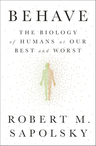
Going easy on ourselves also reflects a key cognitive fact: we judge ourselves by our internal motives and everyone else by their external actions. And thus, in considering our own misdeeds, we have more access to mitigating, situational information. This is straight out of Us/Them—when Thems do something wrong, it’s because they’re simply rotten; when Us-es do it, it’s because of an extenuating circumstance, and “Me” is the most focal Us there is, coming with the most insight into internal state.
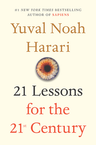
Homo sapiens is a post-truth species, whose power depends on creating and believing fictions. Ever since the Stone Age, self-reinforcing myths have served to unite human collectives. Indeed, Homo sapiens conquered this planet thanks above all to the unique human ability to create and spread fictions. We are the only mammals that can cooperate with numerous strangers because only we can invent fictional stories, spread them around, and convince millions of others to believe in them. As long as everybody believes in the same fictions, we all obey the same laws and can thereby cooperate effectively.
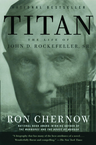
Posing as a deaf-mute peddler selling cheap novelties, he kept a small slate with the words “I am deaf and dumb” chalked across it tied by a string to his buttonhole. On this slate, he conversed with the locals and later boasted how he exploited this ruse to flush out all the town secrets. To win the confidence of strangers and soften them up for the hard sell, he toted along a kaleidoscope, inviting people to peer into it.
It came from willfully defying reality, not only to others but to himself. “He can deceive himself,” said Bill Atkinson. “It allowed him to con people into believing his vision, because he has personally embraced and internalized it.”
So they’d recorded a result from one of the times it worked. It was that recorded result that was displayed at the end of each demo. ... What Shaunak had just described sounded like a sham.
The best startups might be considered slightly less extreme kinds of cults. The biggest difference is that cults tend to be fanatically wrong about something important. People at a successful startup are fanatically right about something those outside it have missed.
What counts is the arrogant gesture, the complete disregard of the opinion of others, the singlehanded defiance of the world. Charlatanism of some degree is indispensable to effective leadership. There can be no mass movement without some deliberate misrepresentation of facts.
This transition is common: one can’t see one’s choices as simply selfish or personal or one would never have the strength to do what ultimately needs to be done. In the way that it became important for Thiel to see Gawker as singularly bad, the conspirator takes up, often without consent, the mantle of defending (or freeing) a number of other people as his or her real reason for proceeding. It is a sort of self-serving selflessness, a shield against what is to come and the feelings it will provoke.
What’s going on is that these people are sharing blue lies. A white lie is told for the benefit of the hearer; a blue lie is told for the benefit of an in-group (originally, fellow police officers). While some of the conspiracy theorists may be genuinely misinformed, most express these beliefs for the purpose of performance rather than truth: they are trying to antagonize liberals and display solidarity with their blood brothers. The anthropologist John Tooby adds that preposterous beliefs are more effective signals of coalitional loyalty than reasonable ones.